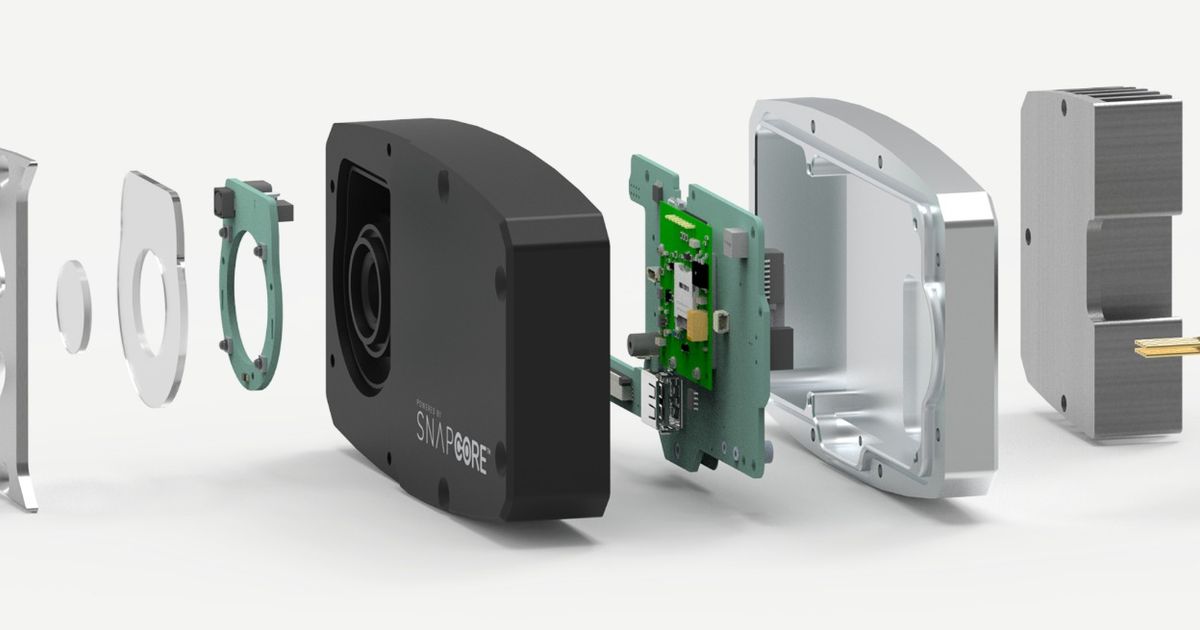
New Zealand’s 15,000-kilometre coastline stands as a gateway to vast marine resources—resources that have sustained communities for centuries. Yet, for all that cultural and economic importance, commercial fishing often remains mysterious to consumers. Chris Rodley and his team at Snap Core plan to fix that by merging AI-driven cameras, satellite trackers, and RFID tagging—all made in Aotearoa—to offer next-level visibility from dock to dinner plate.
“Our mission is to reconnect the fisher, the farmer of the sea, and the customer,” Chris says, founder and CEO. “Marrying hardware with AI and data transforms fisheries into transparent, ethically aligned businesses.”
From the outside, Snap Core looks like another Kiwi tech venture—but step into their workshop, and you’ll find custom circuit boards, toughened enclosures, and marine-grade robotics ready to battle some of the harshest conditions on Earth. Meanwhile, their solutions are quietly changing the way fish, mussels, and salmon reach global dinner plates.
The Spark at Auckland’s Waterfront
Snap Core’s pivot into fisheries came from an unexpected encounter. While installing a time-lapse camera on a construction site along Auckland’s harbour, Chris was approached by the CEO of a major Kiwi fishing firm, who asked:
“Can you put one of those on a boat?”
That offhand question gave birth to Snap Core’s fisheries focus. It kicked off years of R&D to build AI-enabled cameras that can operate in punishing marine conditions—no easy feat. Standard off-the-shelf gear simply wasn’t robust enough, forcing the team to design and manufacture nearly everything in-house, from waterproof seals to embedded AI chips.
“Suddenly, we were on a learning curve about maritime environments, supply chain workflows, and compliance reporting,” Chris recalls. “But it was worth it. Now half of New Zealand’s fishing fleet uses our positioning or camera systems.”
Why “Made in New Zealand” Matters
Snap Core’s commitment to onshore manufacturing isn’t just patriotic; it’s practical. Fishing boats can be away for months at sea, landing in remote ports without easy access to repairs. If a camera or satellite tracker fails, the entire boat’s operation could be jeopardised. Manufacturing in New Zealand allows Snap Core to control quality at every step and iterate quickly.
“Quality control is non-negotiable,” Chris emphasises. “We can’t afford to rely on distant suppliers. We’re hands-on—one minor leak at sea can ruin a million-dollar mission.”
This local manufacturing footprint also aligns with a worldwide trend: supply chains that reduce risk by “near-shoring” or “in-sourcing” high-value production. For Kiwi innovators eyeing the global market, low-volume, high-complexity products—like Snap Core’s—fit perfectly.
AI on the Ocean: Cameras That Think
What sets Snap Core’s hardware apart isn’t just its ruggedness but the fact that AI processes data on-board—even thousands of kilometres from shore. No cloud server. No big data centre. Just the camera, a ruggedised processor, and a bit of Kiwi ingenuity. This allows:
- Real-time catch monitoring: The camera sees what species are hauled aboard, logging data and alerting skippers to bycatch.
- Compliance and transparency: Regulators or market partners gain insight into how fishing is conducted, drastically reducing illegal or overfishing practices.
- Predictive maintenance: Observing early signs of equipment wear, preventing breakdowns in the middle of nowhere.
“Combining edge AI with sensor data is explosively beneficial,” Chris says, referencing Snap Core’s integrated approach. “It’s not just about hardware or software—it’s the synergy of both that gives fishermen real-time value.”
Fighting Modern Slavery on the High Seas
Beyond daily logistics, Snap Core’s solutions address a global humanitarian crisis often overlooked: modern slavery in fisheries. In some Southeast Asian waters, forced labour persists, with crew members trapped or “sold” onto vessels without recourse.
“We realised our cameras could deter human rights abuses,” Chris shares. “When vessels adopt our transparent tech, it’s much harder to hide exploitative practices. That’s life-changing for many fishermen.”
While Snap Core’s technology can’t directly rescue exploited workers, the incentive for fishers to adopt digital solutions—especially if they want to sell into premium markets—often pushes operators toward ethical, traceable standards. It’s a prime example of tech forging moral impact.
Going Digital: RFID and the Twin Farm
In aquaculture, Snap Core marries RFID tagging and AI cameras for a “digital twin” of a mussel farm, salmon pen, or oyster bed. Each crate, line, or bin is tagged, letting farmers track location, feeding schedules, and growth cycles with near-surgical precision. Coupled with sensor data—like water temperature or current flow—AI can predict the optimal times to feed or harvest, boosting yield and quality.
“When aquaculture farmers ‘talk’ to their farm,” Chris says, “they’re not just logging data—they’re getting forecasts, warnings, and marketing tools all in one. They can even share a digital narrative of their mussels’ journey to buyers.”
Imagine scanning a QR code on supermarket mussels to see exactly when and where they were grown, complete with timelapse or AI-verified details on water purity. That’s the future Snap Core envisions—and they’re building it now.
Scaling Up: From Nelson to North America
Headquartered in Nelson, Snap Core also has footprints in Australia, Canada, and a small network in Europe. Each market imposes its own complexities—different species, different regulations, different languages. But the common thread is the need for traceability. Over the past few years, Snap Core acquired a Canadian partner, integrating new R&D and sales channels.
“Localisation is key,” Chris notes. “Fisheries in Newfoundland are unlike those in California. We pair local expertise with our tech to ensure every deployment truly fits the user.”
The Next Horizon: Autonomous Vessels
If AI cameras and RFID tags pushed Snap Core into global waters, the next wave might be fully self-driving boats. Trials are already underway for an autonomous vessel that patrols mussel farms, scanning lines for harvest-readiness or signs of damage and relaying that data back to the farmer.
“It’s the ultimate synergy,” Chris says. “Hardware, data, AI, and real-time feedback—coordinating an entire farm with almost zero human intervention.”
A Bright Future for Kiwi Manufacturing
Chris believes New Zealand’s geographic isolation and resource constraints can be strengths when building high-value, cutting-edge products. By combining Kiwi grit with AI-savvy R&D, Snap Core exemplifies how advanced manufacturing can flourish here, fueling jobs and global impact.
“We can’t outspend the world, so we out-think them,” he quips. “When you see a Snap Core camera on a fishing boat in the Pacific, in some ways, that’s proof our isolation forged real innovation.”
Whether it’s protecting human rights, boosting aquaculture efficiency, or connecting the fisher, farmer, and final consumer, Snap Core stands out as a Future Maker—an advanced manufacturing powerhouse solving deep, global challenges one camera lens at a time.