The final few metres between the airport terminal and your aircraft may have been built in Upper Hutt.
At major airports across New Zealand, Australia and the South Pacific, passengers walk through boarding bridges manufactured by J&D McLennan under its Airport Equipment (AEL) brand. Since 1974, the business has designed, installed and maintained more than 350 of them.
Most travellers never stop to wonder where the bridge came from.
“When people understand what we make and install, they say, ‘I never noticed that,’” says Cameron McLennan, Head of Product Delivery and After Sales Service. “‘I didn’t realise this actually came from little old Upper Hutt — or somewhere in New Zealand.’”
A passenger boarding bridge may look like a tunnel on wheels.
Inside it are structural steel, drive systems, electrical controls, sensors, software and safety systems — brought together by fabricators, machinists, electricians, engineers and programmers around one deceptively simple task:
Get people safely onto the plane.
From horse stables to airport gates
J&D McLennan began in 1945, when brothers James and Duncan McLennan returned from the Second World War and opened a general engineering and maintenance business in rented horse stables in Petone.
They turned their hands to whatever New Zealand needed: road-making machinery, industrial plant, specialist equipment and even the country’s first Ferris wheel.
Then, in the early 1970s, the company won a contract to build six passenger boarding bridges for Auckland Airport’s new international terminal. AEL was established in 1974, creating the specialist aviation business that would take Hutt Valley engineering across the region.
More than 80 years later, the business remains connected to the family that founded it.
“My grandfather and his brother started the company in 1945,” Cameron says. “Since then, my father and my brothers have joined the company, and we are where we are today.”
Cameron began mowing the company lawns and delivering the post at around 10 years old, then followed another career before returning.
The attraction was larger than the family name.
“It’s the ability to engage in the local community, employ people and produce something you have pride in,” he says. “The guys here know they’ve contributed to something physical they can see in the real world.”
More than an airbridge
A passenger boarding bridge has to serve different aircraft, fit within the geometry of an airport gate, withstand weather and corrosion, and move precisely around an aircraft worth hundreds of millions of dollars.
AEL tailors each bridge to the airport and aircraft fleet it will serve. Its current range includes apron-drive, pedestal and elevating bridges capable of serving all commercial aircraft in operation.
But the bridge is only one part of the gate. Anything that touches the plane is the team’s forte.
The Upper Hutt team also works with ground-power systems, pre-conditioned air, in-ground utilities, bridge controls and monitoring. Together, these systems allow an aircraft to receive power and conditioned air from the gate rather than relying entirely on its own auxiliary systems while parked.
The result is not simply a tunnel.
It is a complete gate system — designed, built, installed and supported by people connected to the same New Zealand business.
When the bridge finds the aircraft
One of J&D McLennan’s most important recent innovations removes one of the most delicate manual jobs at the gate.
IntelliDock™ is AEL’s automatic docking system. Cameras, sensors and PLC controls identify the aircraft door, move the bridge into position and continuously adjust its height and alignment. The system can be fitted to existing bridges and used across major commercial aircraft types.
“The system removes the need for the operator to dock against the aircraft,” Cameron explains. “That reduces docking time and the human error that can cause costly delays and damage.”
In 2019, Wellington Airport became the first airport in the world to put a fully automated aerobridge docking system into daily operation. Once an aircraft parked at the gate, IntelliDock scanned its door and drove the bridge into position.
That matters because an airport gate runs on minutes.
A bridge that is late, unavailable or incorrectly positioned can hold up passengers, ground crews and the aircraft’s next departure. When a gate isn’t working, it is a big problem for the airport. If an issue arises, the Upper Hutt team can dial in remotely, talk to technicians on site and help find the fault quickly.
The next evolution moves more of that operation into a central control room. IntelliGate™ brings boarding bridges, ground power, pre-conditioned air and other gate equipment into one dashboard, recording operating data and triggering alerts when something goes wrong.
The steel still moves.
In future, the person overseeing it may not need to be standing inside.
Built to last — and stay supported
The first passenger boarding bridge AEL built entered service at Auckland Airport in 1975.
It remained in continuous operation for 45 years.
When it was replaced in 2020, the new bridge arrived with automatic docking, integrated monitoring and modern pre-conditioned-air technology — a neat picture of how far the company had moved while continuing to support what it had already made.
That longevity is not accidental.
J&D McLennan designs and builds its systems, then maintains, repairs, upgrades and refurbishes them through their working lives. Older bridges can receive new controls and wiring, restored interiors and renewed corrosion protection rather than being replaced automatically.
That relationship is one of the company’s strongest advantages. Some large manufacturers are structured to build, sell and install, then move on. J&D McLennan designs, builds, installs and services its own equipment, making it a true partner for the airport over the life of the asset.
For an airport, the people who answer the phone years later can matter as much as the original steel.
A new factory for the next chapter
In 2025, J&D McLennan moved into a purpose-built factory in Trentham, Upper Hutt, consolidating work that had previously been spread across several buildings.
The new facility gives large components a clearer route through fabrication, machining, electrical work and assembly, while gantry cranes and new production equipment increase the scale of projects the team can handle. A substantial rooftop solar system helps offset the site’s energy use.
It is a factory where the boundary between traditional engineering and technology has largely disappeared.
Mechanical design sits alongside steel fabrication. Electricians work beside controls engineers. Programmers test PLC systems and monitor airport equipment operating in New Zealand and Australia.
The company has its own coders, its own electricians and its own systems designers, and everything is done in-house.
A new ERP system also tracks materials and work through the factory, helping the business see where time is being lost and where a process can improve.
The information moving through the building now matters almost as much as the steel.
More than one way into the factory
A passenger boarding bridge requires almost every kind of manufacturing capability.
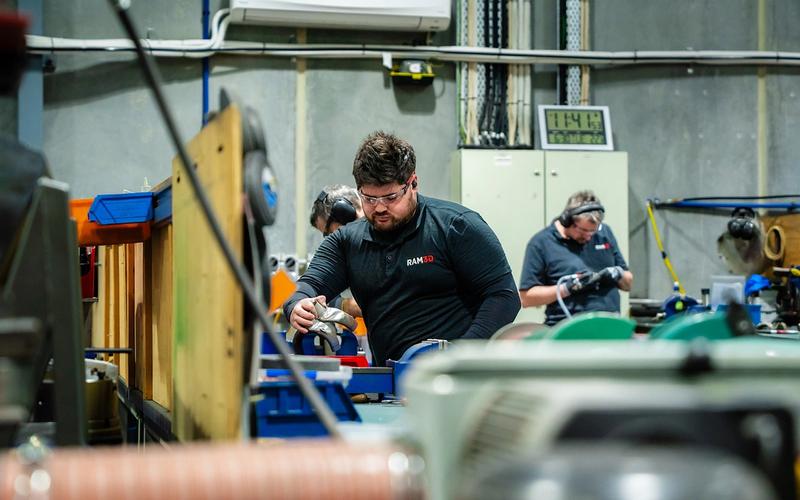
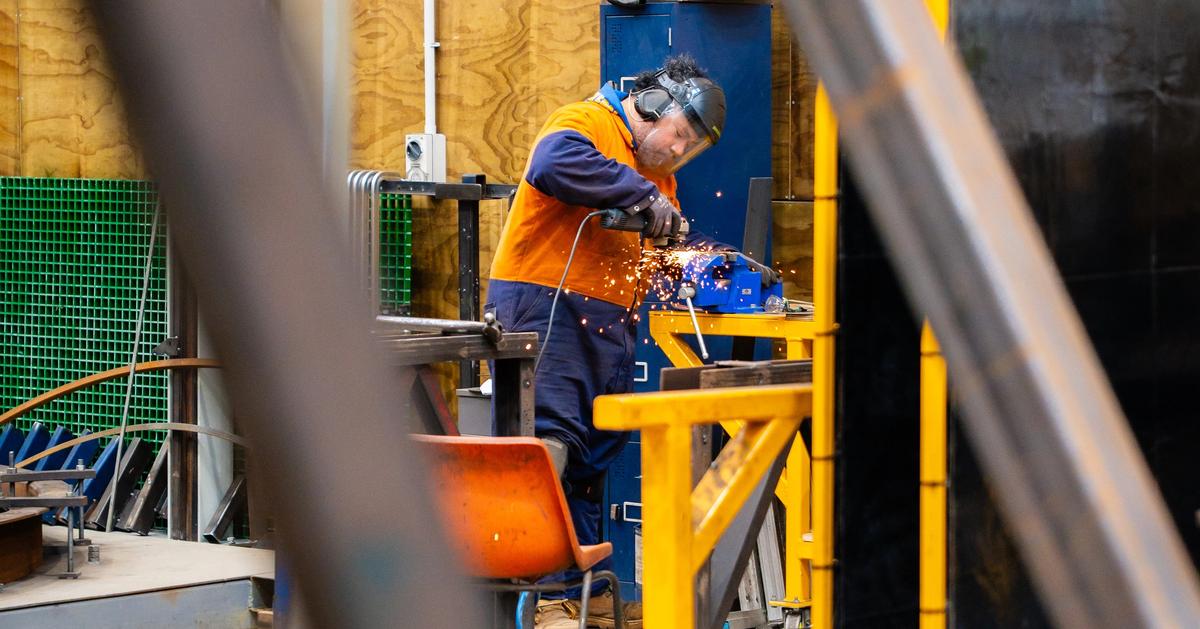
Welders and fabricators create the structure. Machinists make the parts. Electricians wire the systems. Controls engineers and programmers give the bridge its intelligence. Installation and service teams make sure it performs once it reaches the airport.
There is also room for people who did not begin on the tools. Project delivery, finance and business systems are part of the operation too, and the company backs people who want to earn while they learn rather than take on a student loan first.
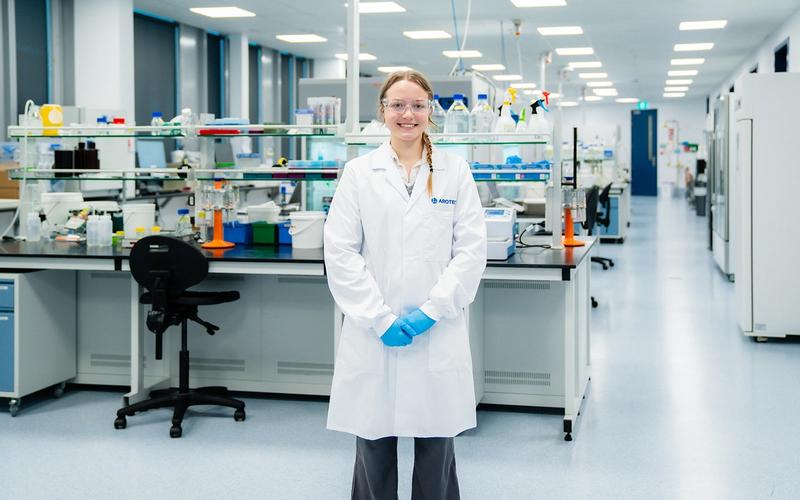
At the time of the shoot, one young electrician was approaching the end of his apprenticeship, while a young mechatronics engineer was working on the “smarts” behind future docking systems.
The company believes employers have to be willing to create that first opening. People can only gain experience if someone takes them under their wing — knowing they will make mistakes, as everyone once did.
Cameron’s advice is equally direct.
“If you’ve got ideas, this is definitely the place for you,” he says. “You don’t have to be highly skilled when you come in. There’s a lot of learning on the job.”
Made in Upper Hutt. Walking passengers to the world.
J&D McLennan remains a general engineering business, but its airport equipment has become the clearest symbol of what the company can do.
AEL is Australasia’s only manufacturer of passenger boarding bridges, with systems operating across New Zealand, Australia, Fiji, Papua New Guinea and the wider South Pacific.
The company competes against much larger international players through adaptability.
“The biggest misconception is that it can’t be done,” Cameron says. “If you’ve got a project or an idea, come and see us. We’ll work through it with our designers and engineers and come up with the solution that best fits.”
That flexibility matters at airports, where gate geometry, aircraft fleets, local rules and operating systems are rarely identical.
J&D McLennan does not ask the airport to fit the factory’s standard answer.
It engineers the answer to fit the airport.
It is the kind of capability New Zealand should be shouting about.
Why it matters for New Zealand
New Zealand is not only using this airport infrastructure.
It knows how to design it, build it, automate it and keep it working.
J&D McLennan creates skilled work across trades, engineering, software, project delivery and service. Its systems help airports move passengers, reduce downtime and extend the useful life of major assets.
Every bridge made here carries New Zealand fabrication, electrical and automation capability into another airport.
And every young person trained here helps ensure that knowledge remains in the country.
Looking ahead
The new Upper Hutt factory gives J&D McLennan room to build more, improve production flow and develop the next generation of its airport systems.
The company sees further opportunity across Australia, the Pacific and the wider Oceania region.
But the future is not simply more steel.
It is more intelligence around the steel.
Bridges that dock themselves.
Gate systems that communicate.
Equipment monitored from another city.
Infrastructure designed to remain useful for decades.
The product may be familiar.
What it can do next is not.
Make your move. Make your mark.
Your future might begin with a welding torch, a PLC screen, an electrical apprenticeship or a line of code in Upper Hutt.
One day, thousands of travellers may walk through something you helped build without ever knowing your name.
Your future’s calling — and it might be the last few metres before take-off.