When you put a clear meat tray in your recycling bin, most of us hope it gets reused.
At Pact Packaging New Zealand, that hope is engineered into a system.
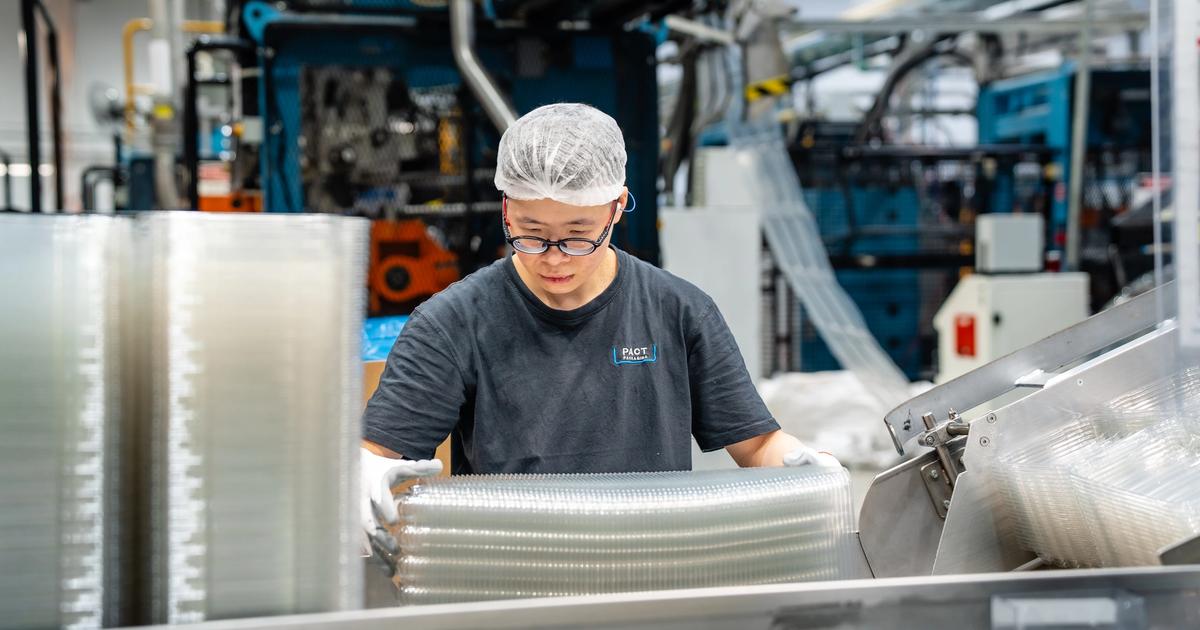
In Wellington, curbside PET trays are washed, reprocessed, and turned back into new food-grade packaging. Those trays are then thermoformed again in Wellington and Auckland and returned to supermarket shelves.
Tray to tray. Bottle to tray. Back into the system.
“We are leading the circular economy,” says Executive General Manager Deanne Holdsworth. “To be able to say that what you put in your curbside bin is actually recycled here in New Zealand - that’s phenomenal.”
Engineering a circular economy
Pact Packaging NZ sits within the wider Pact Group — an Australasian Business include Packaging, Recycling, Reuse and Contract Manufacturing, employing more than 5,000 people globally. But here in Aotearoa, the mission is distinctly local.
“Our purpose is to create a circular economy where resources are reused, not wasted,” the team explains.
That means aspirations to include:
- 50% recycled content
- 100% recyclable packaging by 2030
- Transitioning away from hard to recycle items like foam trays to mono-material PET
- Tackling hard-to-recycle items like paint pails and silage wrap
It also means investing in plant and process to compete internationally.
“We’re competing against countries with cheaper labour,” says Technical Manager Gordon Gilmour. “So we have to invest in new equipment and processes. That’s what keeps us at the forefront.”
Manufacturing that keeps evolving
Gordon has been in plastics engineering for over 30 years.
As a kid, he pulled toys apart to see how they worked. Today, he retrofits tooling, speeds up changeovers, and introduces new automation to improve safety and efficiency.
“Every day is a little bit different,” he says. “There’s always something new to tackle.”
Manufacturing at Pact Packaging NZ isn’t static.
It spans:
- injection moulding
- Thermoforming
- blowmoulding
- Extrusion
- Decoration
- Steel
- automation upgrades
- Toolmaking
- design
- robotics
“There are so many opportunities,” Gordon says. “If you’re hands-on, you can do that. If you’re into automation or robotics, you can go that way too.”
It’s a career you can shape.
From casual operator to qualified technician
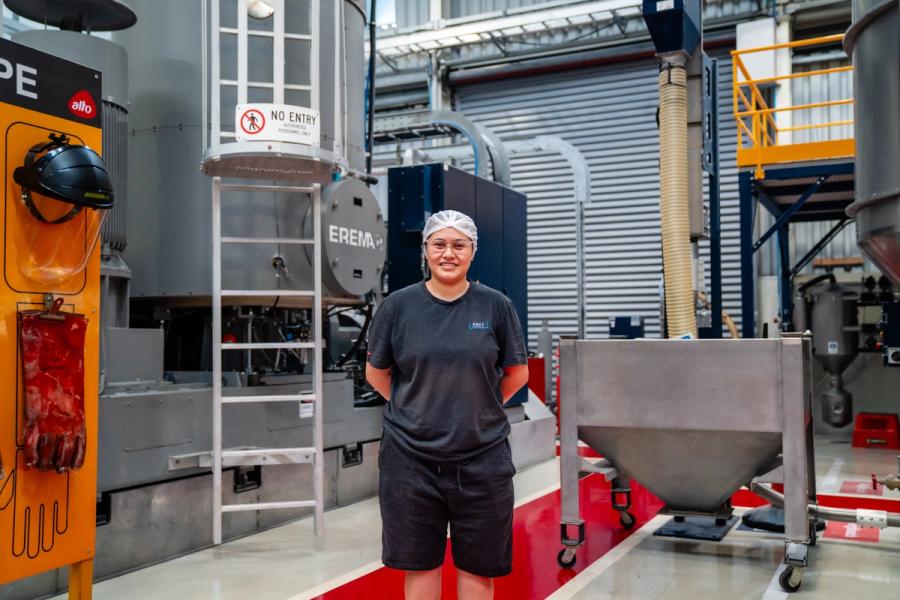
Matiana Solier didn’t plan a career in manufacturing.
After losing her job during COVID, she joined Pact as a casual machine operator — encouraged by her dad, who also worked there.
“I ended up loving it,” she says.
Now she’s completing her Level 3 apprenticeship while raising a young child.
“It’s hard work,” she says. “Physically and mentally challenging. But it’s worth it.”
Being the only woman in her department pushes her.
“It proves that females can do it too.”
For Manpreet Singh, a plastics technician, the appeal lies in problem-solving.
“There’s never the same challenge every day,” he says. “You narrow down the problem, brainstorm with the team, and find the best solution.”
He completed his plastics processing apprenticeship while working full-time.
“You’re earning and learning at the same time,” he says.
That combination — technical growth and financial stability — is what keeps people in manufacturing long-term.
Investing to stay competitive
Deanne started her career as a chartered accountant.
“I was a bit of a nerd at school,” she laughs.
She worked her way through commercial management, plant leadership, and a role in sales with the SLT before stepping into the Executive GM role.
For her, manufacturing in New Zealand is about belief.
“The belief that we can make manufacturing incredible in New Zealand,” she says. “And that people are our core.”
Investment isn’t optional.
Whether it’s:
- automation upgrades
- material science innovation
- recycled content systems
- leadership development
…it all compounds.
“Constantly innovating and investing in new equipment really pays dividends for us as a business,” Gordon says.
Why this matters for New Zealand
Packaging might seem ordinary.
But behind every milk bottle, protein tray, or food container is an ecosystem of engineers, technicians, designers, and operators.
Local manufacturing gives New Zealand:
- food security confidence
- supply chain control
- sustainability credibility
- high-skill jobs
- export-ready capability
“If manufacturing doesn’t occur in New Zealand,” Deanne says, “we’re not able to control things like our food security.”
In a small nation, that matters.
Small nation. Big impact.
New Zealand may not have the scale of larger economies.
But Pact proves that with investment, innovation, and belief, we can sit at the front of global circular packaging.
“New Zealand — small nation, big impact,” Deanne says.
From bin to back on shelf, the system works.
Make your move. Make your mark.
Your future might not look like you expect.
It might look like robotics, recycled plastic, and a production line humming at full speed.
And it might just start on a factory floor.