There are New Zealand companies people recognise instantly.
And then there are the ones quietly shaping skylines across the world.
Howick Ltd is one of those companies.
From its base in Auckland, Howick designs and builds precision roll-forming machines for light gauge steel framing — machines now operating in over 80 countries.
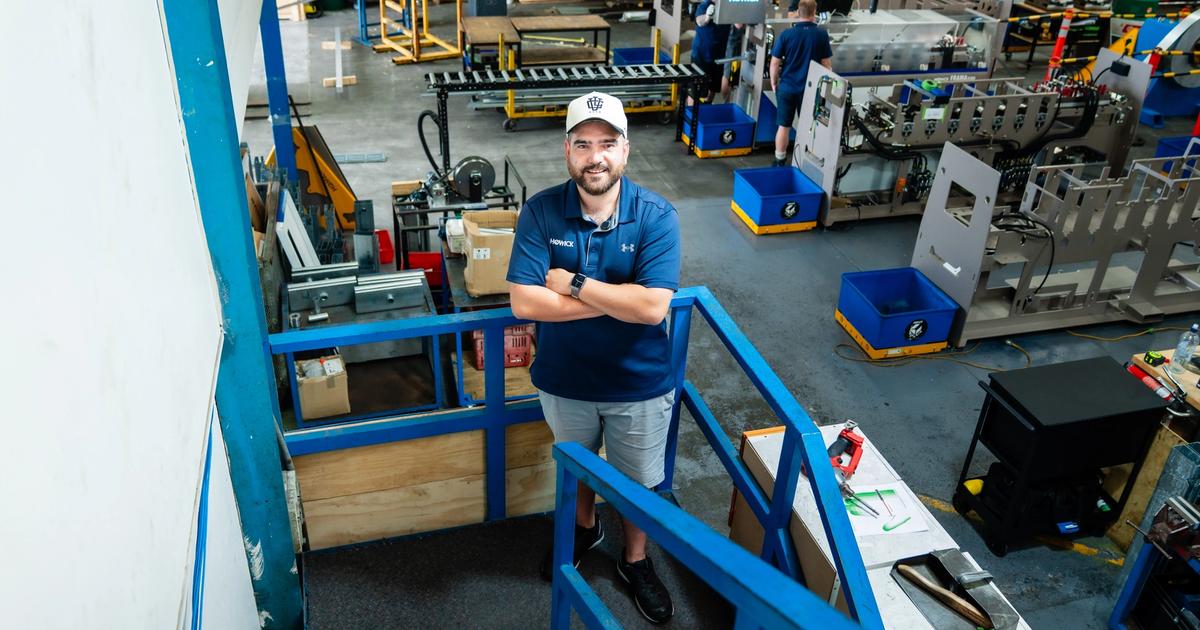
“We were a pretty good secret locally,” says CEO Nick Coubray. “But we’ve got a really big global footprint.”
It’s a very New Zealand way of saying something significant.
Small country. Serious capability.
Howick’s steel framing machines are widely regarded as among the best in the world — referred to overseas as the “Rolls Royce” standard.
That reputation wasn’t built on volume. It was built on necessity.
“New Zealand really innovates above our weight, because we have to,” Nick says. “We’re far away. We do small market things. We’re not building millions of things — we’re building hundreds or tens of things. And that forces us to think differently.”
Instead of chasing scale, Howick focused on precision. Instead of chasing price, it focused on reliability.
The result is a technology platform that allows builders to manufacture complete steel building components with millimetre accuracy — directly from CAD and BIM inputs — transforming how projects are delivered.
Modern construction, not traditional framing
Howick sits at the heart of the global shift toward off-site and modular construction.
Their roll-forming machines turn digital design files into precise, ready-to-assemble steel components — walls, floors, trusses, panels — reducing waste and dramatically accelerating build times.
On a 16-storey hotel project in New Zealand, prefabricated light gauge steel framing cut framing labour by 50–70%, reducing certain construction stages from seven days per floor to just two.
That isn’t incremental improvement. It is structural change.
This is modern construction — faster, cleaner, more predictable — and Howick’s machines are enabling it globally.
An ecosystem, not just a factory
While Howick Ltd manufactures the world-class FRAMA™ roll-forming systems, the wider Howick Group has evolved into a vertically integrated ecosystem.
That includes:
- Rollforming Services, delivering steel framing solutions for NZ builders who do not need their own plant
- Central Steel Framing, supplying custom light-gauge steel framing locally
- Specialist systems such as SPEEDFLOOR®, X-TENDA™ 3600, and X-CALIBR™, solving specific structural and flooring challenges
The result is not just machinery, but capability that stretches from advanced manufacturing through to on-site application.
Howick does not just export technology. It exports a way of building.
Innovation that compounds
At Howick, innovation is not a one-off event. It is continuous.
“We always joke that we never build two machines the same,” Nick says. “Every time we do something, there’s an improvement.”
That mindset runs through the business — from lean workflow refinements to smarter automation and digital systems.
During global supply chain disruptions, keeping 100% of their machine frames and core components manufactured in New Zealand gave Howick resilience and control that others did not have.
“Investing in smart processes actually gives you control of your own destiny,” Nick explains. “It allows you to do a lot of things that you can’t do if you farm it out.”
Control means:
- improved build quality
- faster iteration
- reduced rework
- consistent global delivery
It also means confidence.
A family business building futures
Howick is a third-generation family business, founded in 1978.
Nick grew up in the workshop.
“I’ve been here since I was about yay big,” he says. “Done pretty much every job in the building.”
That hands-on progression defines the culture.
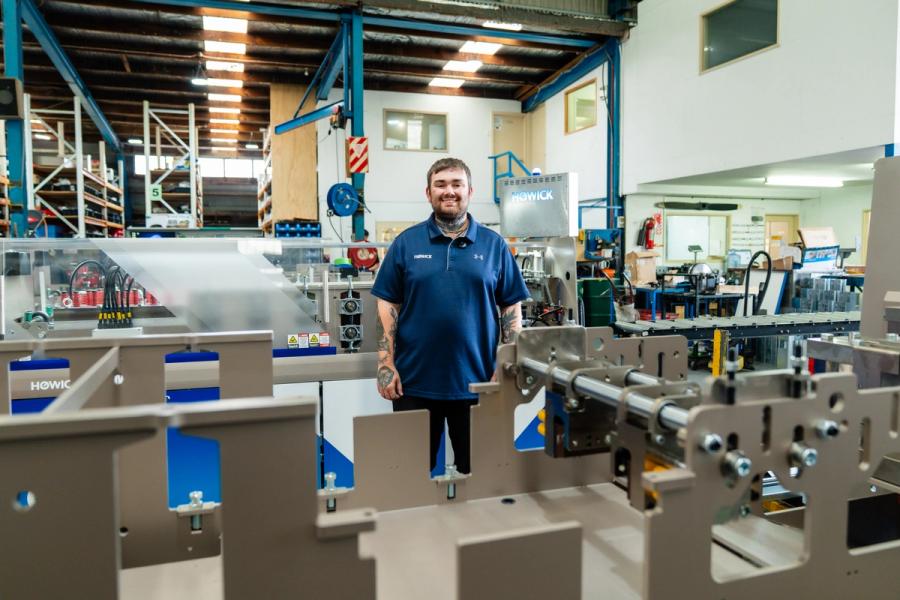
Apprentices move across mechanical, electrical, CNC, and design roles. Engineers spend time on the floor. Teams are encouraged to try new tooling and new ideas.
“If you’re happy doing what you want to do, that’s the right job for you.”
In a small country, that flexibility is an advantage.
“Because we are small businesses, everybody can have a go at most things,” Nick says. “They wear many hats.”
Manufacturing here isn’t siloed. It is collaborative, practical, and deeply skilled.
Exporting trust
Around 95% of Howick’s output is exported.
But the company doesn’t talk about exports in terms of markets conquered. It talks about partnerships built.
When global customers refer to their framing systems simply as “the Howick,” it signals something more powerful than branding.
It signals trust.
Through initiatives like SMART BUILD SPOTLIGHT and the STEEL HORIZONS™ forum, Howick actively connects with global leaders in offsite and modern construction — not just as a supplier, but as a contributor to the conversation.
They aren’t waiting for the future of construction. They are helping shape it.
Why it matters for New Zealand
Advanced manufacturing doesn’t just create products.
It creates multipliers.
“It was said by Callaghan years ago — for every one manufacturing job there’s 10 downstream jobs,” Nick notes.
High-value manufacturing:
- builds skilled, well paid roles
- anchors capability locally
- strengthens export earnings
- compounds knowledge over time
“Manufacturing brings a lot of skills and high paid jobs that wouldn’t be there if we didn’t invent and develop things in New Zealand,” Nick says.
New Zealand can compete globally.
But, as Nick puts it:
“We have to do it right. And we have to do it our way.”
Built here. Wanted worldwide.
From Auckland workshops to construction sites in more than 80 countries, Howick machines are quietly reshaping how the world builds.
- Housing.
- Schools.
- Hospitals.
- Hotels.
- Infrastructure.
- Garden sheds.
- Even global attractions.
Made in New Zealand. Trusted everywhere.
Make your move. Make your mark.
The future of construction isn’t abstract. It is being formed, millimetre by millimetre, right here.