APL supplies materials and systems to manufacture around half of New Zealand’s aluminium joinery systems.
Which means there’s a good chance their work is already in your home — in the doors you close, the windows you open, the frames you lean on without thinking.
The difference is how it’s made.
In the Waikato, APL Manufacturing is running a factory built on data, automation, and some of the most practical AI in the country — not as a buzzword, but as a tool that lifts quality and keeps things moving.
What most people don’t see is what’s happening behind the scenes: a New Zealand manufacturer operating at the cutting edge of Industry 4.0, AI-enabled quality control, and product-level digital tracking — all designed, built and run by local teams.
“A great number of homes have our product in it,” says Howard Fountaine, General Manager of APL Manufacturing. “You might not know it — but every time you touch a window or a door, you’re very likely interacting with something we’ve made right here in New Zealand.”
Bringing manufacturing home — and moving it forward
Until recently, much of New Zealand’s joinery hardware componentry was made offshore. APL Manufacturing has helped bring that capability back — and then pushed it further.
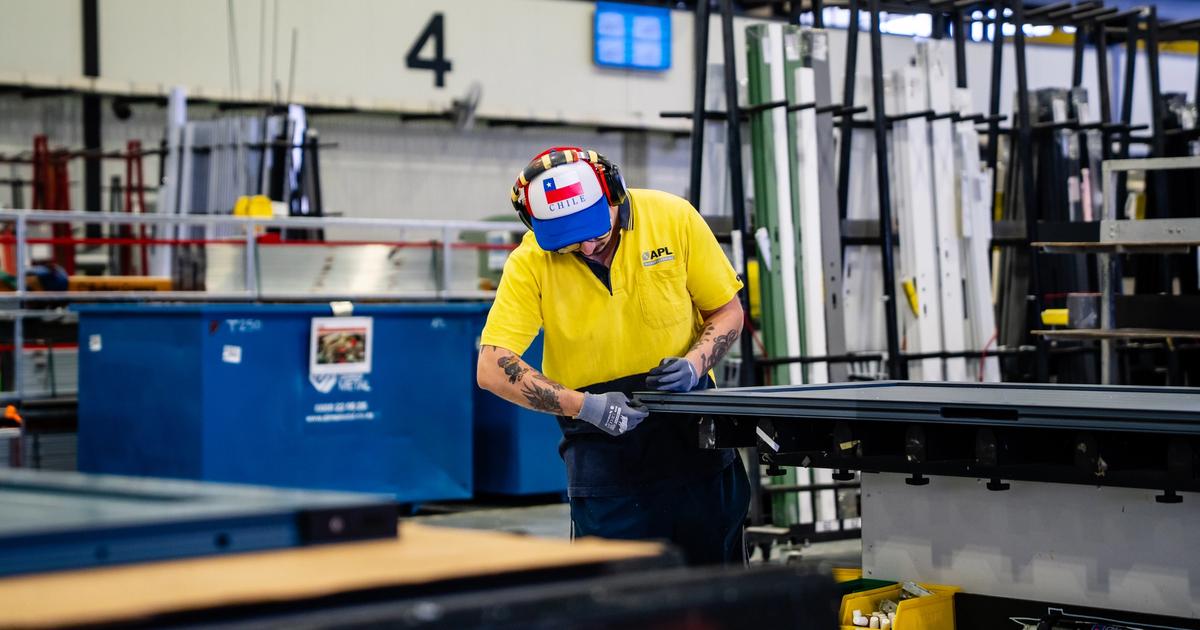
Operating as part of Profile Group, APL Manufacturing is part of a vertically integrated manufacturing operation that supports joinery fabricators from Kaitaia to Southland. What sets them apart isn’t just scale — it’s how deliberately they’ve embraced modern manufacturing.
“We’ve adopted Industry 4.0 practices and data harvesting right across the factory floor,” Howard explains. “That’s what’s turned us into a genuinely modern manufacturing environment.”
From 60% to 99% — by getting smarter, not bigger
APL Manufacturing’s digital journey didn’t start with a massive capital spend. It started with curiosity, a vision — and a willingness to break complex problems into small, practical steps.
By harvesting live data from the factory floor, APL Manufacturing lifted operational proficiency from average percentages to the high-90s — and then kept it there.
“We went from around 60–70% DiFoT performance straight into the high 90s,” says Howard. “Now we’re chasing the final decimal point.”
The key? Small projects. Smart people. Clear intent.
“It’s not expensive,” he says. “Once you get in there, you realise how much you can achieve without huge investment.”
AI that actually does something
At APL Manufacturing, AI isn’t a buzzword — it’s a tool on the factory floor.
Using cameras and machine learning, APL Manufacturing has implemented AI-based visual inspection that checks finished products against digital work instructions before they leave the factory. The aim is for every product to be digitally assessed and verified.
“It’s AI in action,” Howard says. “When you see it working, it’s incredibly powerful.”
That same thinking now supports customer service, too — with AI-driven knowledge systems that interrogate technical documents and surface the right answers, fast.
A digital thread through every product
APL Manufacturing has taken the next step by embedding NFC chips directly into some products.
Those tiny chips carry a rich digital history: where the product came from, how it was made, which batch it belongs to, and where it’s going — all linked back to APL’s ERP system.
“That little chip tells the full story of the product,” Howard explains. “And it connects our suppliers into the system too.”
It means quality, accountability and transparency don’t stop at APL’s door — they extend right across the supply chain.
Growing talent, not just technology
Technology alone doesn’t build a great factory. People do.
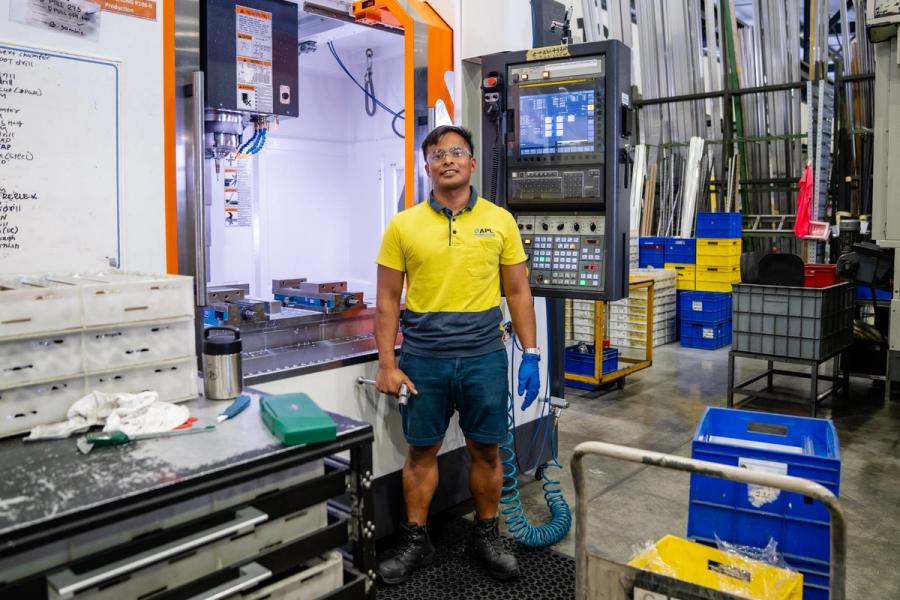
APL Manufacturing has made a deliberate investment in home-grown talent, partnering with local schools, polytechnics and universities to bring young people directly into the business.
Through earn-as-you-learn programmes, scholarships and hands-on roles, APL has:
- Employes six students full-time each year
- Supported three engineering and mechatronics graduates into the business through scholarships
- Built a pipeline of capability that grows with the factory itself
“New Zealand has incredible young talent,” Howard says. “Sometimes we just struggle to reach them. When you do — the results are outstanding.”
Why this matters for Aotearoa
APL Manufacturing shows what modern New Zealand manufacturing can look like at scale:
- Advanced, data-driven and globally competitive
- Built on local skills and local jobs
- Supplying everyday infrastructure that keeps the country running
“Manufacturing is fun,” Howard says. “We come to work, develop new ideas, grow the business — and in doing that, we grow the country too.”
It’s proof that New Zealand doesn’t need to choose between tradition and technology. The two can — and should — work together.
A future worth making
Looking ahead, Howard is confident about the role manufacturing can play in New Zealand’s economy — especially if more businesses back themselves to modernise and invest in people.
“Don’t be nervous about words like AI or digital systems,” he says. “Get in there. Take the first step. You won’t look back.”
For curious, hands-on, problem-solving minds, manufacturing offers something rare: work that’s tangible, evolving, and deeply connected to the real world.
Make your move. Make your mark.
APL Manufacturing is a reminder that some of New Zealand’s most advanced technology isn’t hidden in labs or offices — it’s running quietly inside factories, inside homes, inside everyday life.
This is manufacturing, re-imagined. And it’s being built right here.