Not many countries still build aircraft.
New Zealand still does.
And in a hangar at Hamilton Airport, NZAero is doing it almost entirely in-house — taking raw material in one end and producing complete aircraft at the other.
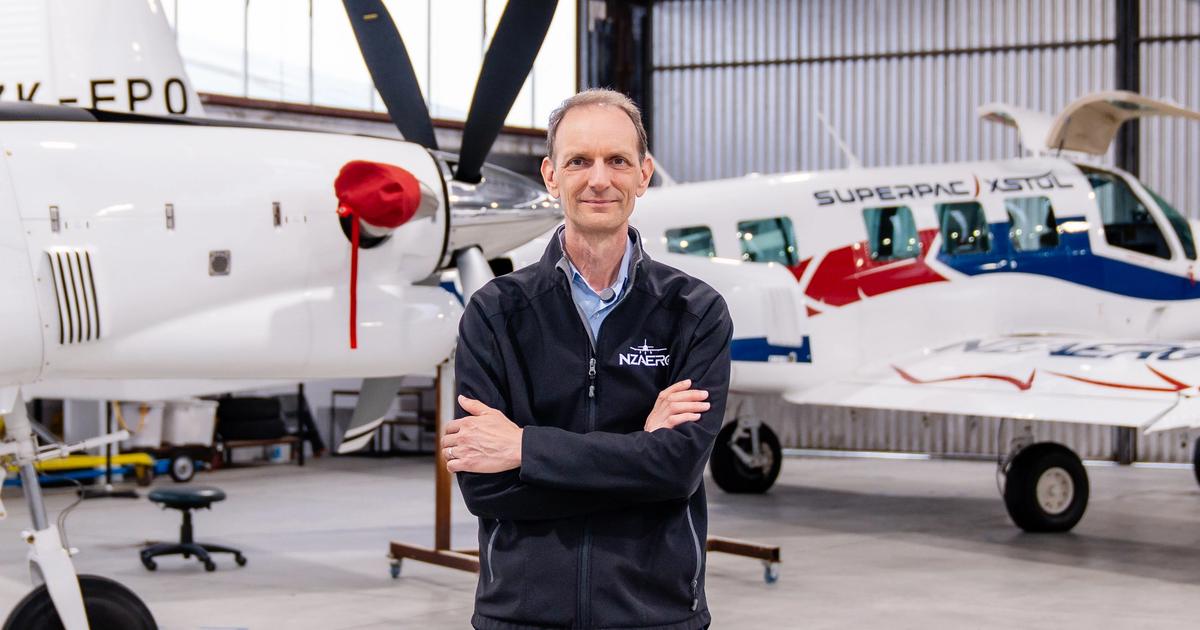
“In the world today, there are only 30 aircraft manufacturers that produce fixed-wing general aviation aircraft — and New Zealand is one of them,” says CEO Stephen Burrows.
That’s not a statistic most people would guess.
More people should know that.
From wartime hangar to working aircraft
NZAero’s story stretches back more than 70 years.
The company operates from a hangar complex at Hamilton Airport with roots in a United States military facility established during World War II. Over time, that site evolved from aircraft maintenance and modification into full aircraft manufacture - a rare capability in a country better known for what comes off the farm than what comes off a production line.
Today, together with its predecessors, NZAero has produced more than 700 aircraft across agricultural, utility, training, and skydiving applications.
That history matters.
It means NZAero isn’t just assembling parts - it is carrying forward a uniquely New Zealand line of engineering, one that grew out of our need for rugged, practical aircraft that could work hard, land rough, and keep going.
As Stephen puts it: “We take raw material in the back end, and we produce aircraft.”
Simple. Extraordinary.
Built here. Flown worldwide.
NZAero is New Zealand’s only commercial aircraft manufacturer, and the scale of what happens inside that Hamilton facility is easy to underestimate.
According to the team, around 98% of each aircraft is made right here — with design, certification, machining, forming, laser cutting, panel beating, composite work, final assembly, and test flying all tied closely together.
For manufacturing apprentice Ahmed, that’s what makes the job special.
“Instead of making fridges, doors, windows, you know, car parts — we’re making planes,” he says. “It’s pretty sick.”
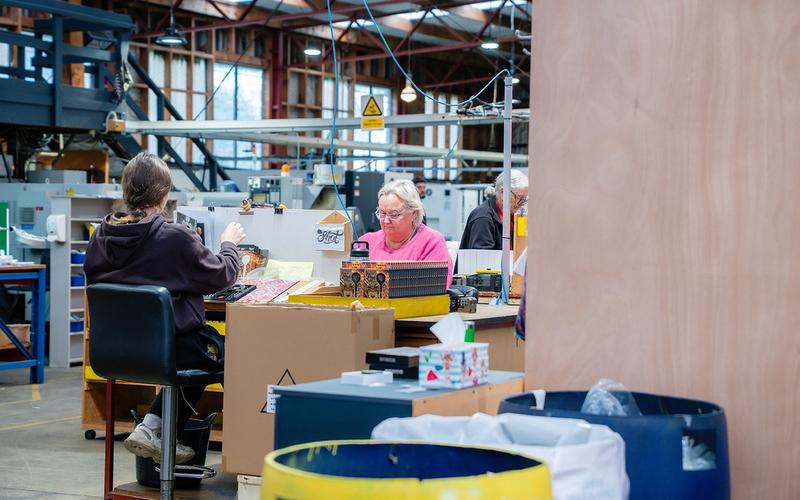
In one part of the workshop, sheet metal is being formed. In another, tanks, fairings, and assemblies are coming together. A few metres away, apprentices are learning skills that can take them from the factory floor to the flight line – and beyond.
That’s the thing about NZAero. The work is highly technical, but the pride is immediate.
You can see the wings being formed.You can see the tanks being built.You can see the aircraft take shape.
And then you can see them leave the country and go to work around the world.
Aircraft with a job to do
NZAero’s aircraft aren’t built to sit polished on a tarmac.
They’re designed to work.
Across its history, the company and its predecessors have built aircraft for aerial topdressing, skydiving, training, freight, and utility operations in places where reliability matters more than glamour.
From the Fletcher and Cresco - icons of New Zealand agricultural aviation - through to today’s 750XL utility aircraft, the thread is the same: practical aircraft for tough environments.
The current 750XL and 750XL-II SuperPac sit firmly in that tradition. They are built for short strips, heavy payloads, and regions where aviation is not a luxury but a lifeline.
That is what gives NZAero its global relevance.
It’s not chasing novelty.It’s built to solve real problems.
Where careers take off
One of the strongest parts of the NZAero story isn’t just what it builds. It’s who it brings with it.
The factory floor includes apprentices, school-leavers, earn-as-you-learn participants, and people who’ve found their way into aerospace from very different starting points.
Ahmed came into manufacturing through school engineering projects, including building a miniature pit bike, before realising how many different pathways manufacturing could offer.
“It’s not just machining or welding,” he explains. “There was design, there was electrical work - definitely different variations of manufacturing.”
Now he’s working toward further aviation qualifications and sees a long future in the industry.
Mia’s path was different again. She was strong in maths, interested in engineering, and wasn’t ready to lock herself into a university degree without knowing whether it was the right fit. An earn-as-you-learn programme gave her the chance to try three workplaces, gain a qualification, and find her place.
That place turned out to be NZAero.
“It’s a pretty cool niche to tap into,” she says. “It’s really, really cool to be involved in the process.”
She’s frank about what some young women might feel walking into a workshop environment for the first time.
“It’s pretty intimidating stepping into workplaces like this,” she says. “But everyone here is super supportive.”
That matters.
Because the future of advanced manufacturing depends on more people seeing themselves in it.
Old skills. New technology. Same craft
What makes NZAero especially compelling is the range of skills under one roof.
Stephen describes the work as a blend of “dying arts” and cutting-edge technology. Sheet metal skills, forming, fitting, and fabrication sit alongside CNC machining, carbon fibre, and the newer propulsion and systems work shaping the wider aerospace sector.
That mix is exactly what makes the company a strong Future Makers story.
It shows young people that advanced manufacturing isn’t one thing. It is many things - connected.
It can be hands-on.It can be digital.It can be physical, precise, analytical, creative.
And it can lead in more directions than many people realise — from aircraft maintenance to design engineering, from production roles to commercial aviation and beyond.
As Stephen puts it, “It is very much something that can be passed down through the generations.”
Why it matters for New Zealand
NZAero is one company. But what it represents is bigger.
It shows that New Zealand can still make highly complex things.It shows that advanced manufacturing capability can be retained and renewed.And it shows that export-led, high-skill production is not an abstract idea — it is alive, and it is happening in Hamilton.
For a small country, that matters.
Because every aircraft built here is more than an aircraft. It is:
- skilled work kept onshore
- capability passed to the next generation
- export value created from knowledge and craft
- confidence that New Zealand can still build what the world needs
Stephen is clear on the challenge ahead.
“If you don’t invest now,” he says, “you’re not ensuring the future of your organisation going forward.”
That investment is not just in equipment.It’s in people.
The future is already in the workshop
There is something quietly powerful about a place where young apprentices can stand beside experienced aircraft builders and say: I helped make that.
At NZAero, that’s happening every day.
Aircraft are still being built by hand.Skills are still being passed on.And a new generation is learning that manufacturing can be technical, meaningful, and globally relevant all at once.
That’s not nostalgia. That’s New Zealand building its future.
Make your move. Make your mark.
From a Hamilton hangar to airstrips around the world, NZAero proves that New Zealand manufacturing can still take off - and take others with it.