Not many companies can say they’re working on the future of spaceflight from New Zealand.
Dawn Aerospace can.
With manufacturing and flight-testing anchored in Aotearoa, Dawn is building two things the global space industry badly needs: a fully reusable spaceplane for routine access to space, and green, modular propulsion systems that help satellites move once they get there. The company describes itself not as a rocket startup, but as a space transportation company - one focused on making access to space more frequent, affordable, and responsible.
That distinction matters.
Because Dawn isn’t just building hardware. It’s building infrastructure for what comes next.
From New Zealand workshops to orbit
At Dawn, the work spans both sides of the space equation.
On one side is the Aurora spaceplane: a reusable, rocket-powered aircraft designed to take off from a conventional runway, fly at extreme speed, and return to Earth ready to go again. On the other is a family of in-space propulsion systems - compact, standardised units that allow satellites to manoeuvre in orbit and, in development to be refuelled rather than discarded.
“We see today’s space industry much like the early days of the internet,” the company says. “Full of possibility, with huge opportunities humanity hasn’t yet imagined.”
It’s a big vision. But it’s grounded in very practical engineering.
A spaceplane that thinks like an aircraft
Dawn’s Aurora is designed around a simple but powerful idea: space access should operate more like aviation than traditional rocketry.
That means runway operations, rapid turnaround, and reusability built into the system from the start. Dawn says the vehicle is designed for high-frequency suborbital flight from conventional runways, applying the reliability model of aviation to space access rather than relying on one-off, expendable launches.
The company’s rocket-powered aircraft has already broken the sound barrier, set performance records during testing, and completed dozens of flights across its jet-powered and rocket-powered programmes. Dawn’s own updates describe the Aurora as a world-record-setting suborbital spaceplane, and the company has demonstrated rapid turnaround testing, including the goal of multiple flights to space (100 km altitude) in a day.
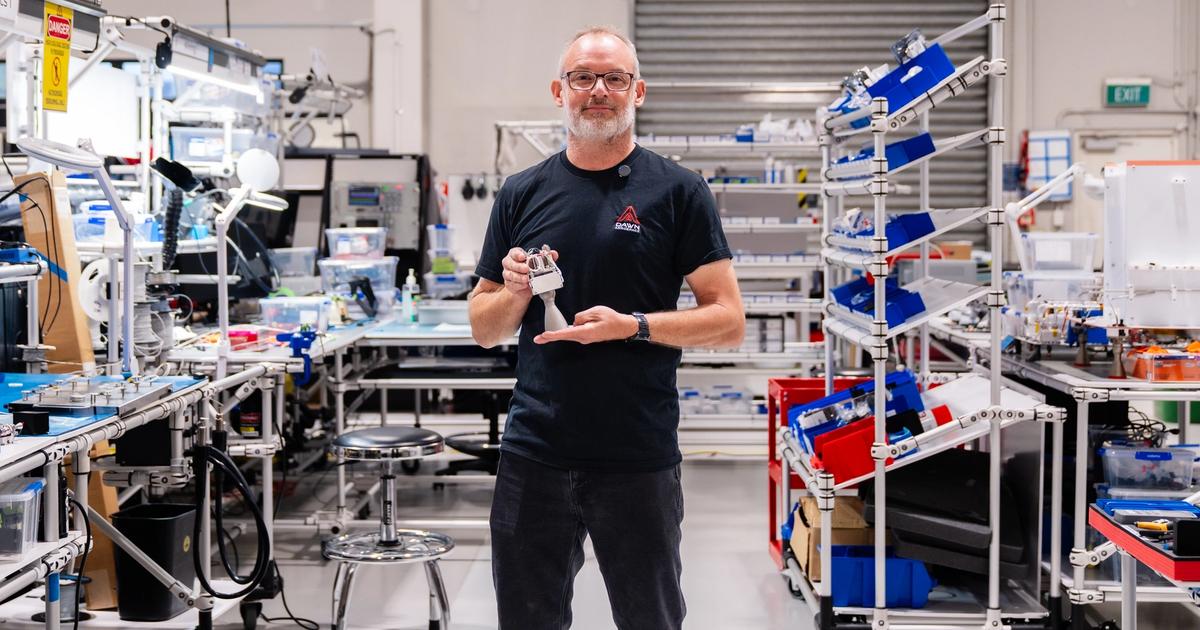
For Avionics Production Lead Neil Pearson, that’s still hard to get used to.
“Every time it flies, I’m just in absolute awe,” he says. “It never gets boring. It’s something I’ve always wanted to be part of.”
Green propulsion, built to scale
The second side of Dawn’s business is already operating in orbit.
Its propulsion systems use nitrous oxide and propene instead of hydrazine, the highly toxic propellant that has long been standard in the space sector. Dawn positions these systems as simpler to handle, safer to integrate, and easier to manufacture at scale than traditional alternatives.
That matters because Dawn is pursuing something unusual in space: standardisation.
Rather than treating every piece of satellite propulsion as a bespoke one-off, the company builds around modular, repeatable systems that can be produced consistently and improved with every build. Dawn says this is one of the key reasons it can compete globally.
The strategy is working. Dawn’s propulsion systems are now operating on dozens of satellites, with deep-space and lunar-related missions already underway or contracted, and the company’s 2026 updates describe in-orbit refuelling as the next big step.
This is not artisanal space hardware.
It is an industrial discipline applied to one of the world’s hardest engineering environments.
Manufacturing that mixes craft and cutting-edge
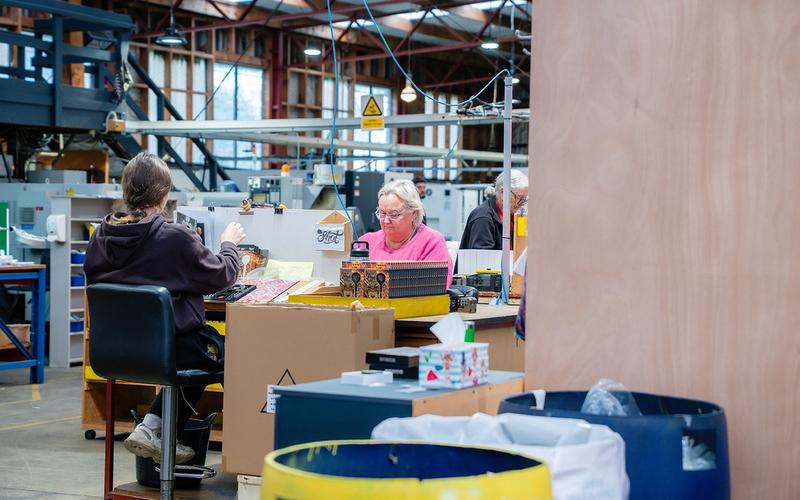
One of the strongest Future Makers threads in Dawn’s story is how clearly the company shows what modern manufacturing actually looks like.
For Manufacturing Engineer Yelena Cunningham, the appeal is the mix of digital and hands-on work.
“Almost everything that I manufacture goes into space,” she says. “That’s pretty cool.”
She talks about days that move between CAD/CAM, machine setup, and precision component production. The old stereotype of manufacturing as dirty, repetitive factory work does not fit what she sees on the floor.
“It’s very, very clean,” she says. “I don’t get my hands very dirty. I get to do a lot of computer work, but I also get to run the machines. You really get to take the component through the whole process.”
That balance - computers and craft, process and problem-solving - is one of the reasons Dawn’s people talk about the work with so much energy.
Where apprentices become leaders
Dawn’s team is intentionally mixed: apprentices, tradespeople, technicians, and degree-qualified engineers working side by side. The company says that diversity of background is a strength, not a compromise, and that people development is central to how the business works.
New Zealand Production Manager Stephan Langer is a great example of that progression. He came into the industry through trade training rather than staying on a purely academic track, and now leads production strategy, resources, and continuous improvement across the NZ operation.
“Learning on the job definitely suited my learning style,” he says. “It’s very much cause and effect. If I do this, it fixes this. That made sense to me.”
For Stephan, manufacturing is not a fallback. It is a system where people can move up quickly because the work is tangible, the feedback loop is real, and the learning never really stops.
Process innovation as a competitive advantage
Dawn’s people are clear on one thing: clever engineering alone is not enough.
What keeps the company ahead is a willingness to constantly improve how things are made.
Stephan describes how the team has repeatedly redesigned its test infrastructure — including vacuum chamber systems used to qualify thrusters - moving from R&D-centric setups to higher-throughput production rigs, then increasing capacity again by reworking the process rather than simply buying more hardware.
“We doubled our production capacity just by reviewing the production process and the acceptance criteria,” he explains. “Without process development, we wouldn’t be where we are.”
That mindset runs through the company’s Q&A as well: keep processes simple, introduce automation only when it truly helps, and invest where quality, safety, and repeatability demand it.
In other words: don’t automate chaos. Dial it in first. Then scale.
Why this matters for New Zealand
Dawn Aerospace is a space transportation company.
But it is also a New Zealand manufacturing story.
It shows what happens when a small country combines scientific ambition, practical engineering, and a willingness to build things properly. It also shows that advanced manufacturing careers do not all begin the same way. Some start in trades. Some in engineering degrees. Some on the workshop floor. What matters is that the opportunities are real - and growing.
For Neil, that’s the point he wants young people to hear.
“Manufacturing is an absolutely amazing career,” he says. “If you want to get into it, get into it. You’ll grow your skills, you’ll get real satisfaction, and you’ll be proud of what you do.”
New Zealand does not always shout about what it makes.
Maybe it should.
Because from Christchurch runways to satellites in orbit, Dawn Aerospace is proof that this country can build for the future and compete on a global stage while doing it.
Make your move. Make your mark.
Space may feel far away.
But at Dawn Aerospace, the future is already on the factory floor.

The Dawn Aerospace content was proudly supported by ChristchurchNZ. Their support helps bring Future Makers stories to life and enables us to showcase the businesses and innovators shaping what’s next. We’re grateful for their partnership and commitment to empowering future-focused ideas and talent.