Some manufacturers build products.
Others build capability.
From its base in Christchurch, Argus ManuTech does both — helping companies take complex, high-spec products from concept through to scaled production and global distribution.
Argus ManuTech sits at the centre of the wider Argus Group ecosystem, providing engineering, manufacturing, and supply chain management not only for Argus Heating and Argus CableTech, but also for external customers across aerospace, medtech, energy, and transport sectors.
In simple terms: if the product is complex, compliance-heavy, and mission-critical, they’re the partner you call.
From idea to international shipment
Argus ManuTech doesn’t position itself as a jobbing contract manufacturer.
It positions itself as a solution-engineering hub.
From early-stage R&D and design-for-manufacture (DfM) support through to production line optimisation, quality systems, and global logistics, their work spans the entire product lifecycle.
Their portfolio includes:
● high-complexity cable and harness assemblies for aerospace and defence
● viscous reheating and bulk container heating systems
● electrical medical devices
● precision industrial technologies
● Industrial heating electrification
● automotive harness assemblies and future fuel electrical support
One standout example is their partnership with MARS Bioimaging, manufacturing their photon-counting 3D colour CT scanners — a global first in medical imaging.
This is not low-spec fabrication.
This is advanced manufacturing with consequences.
Digital transformation, done properly
At Argus ManuTech, digital transformation wasn’t a tech project.
It was a people project.
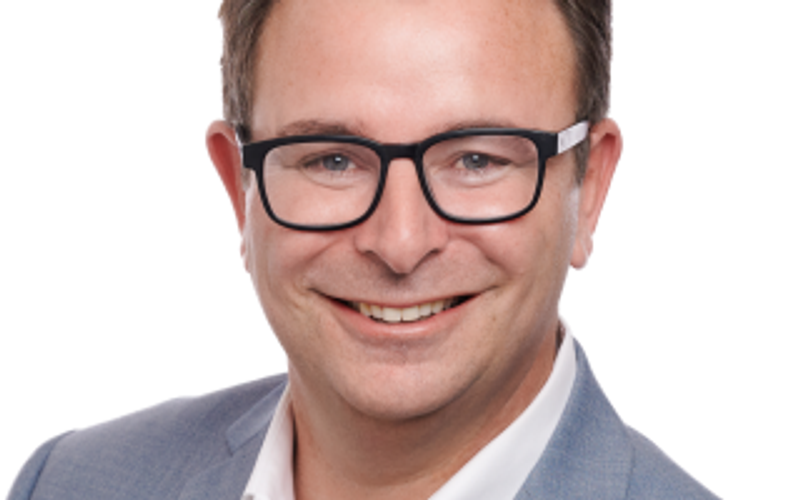
“At Argus ManuTech, we prioritise our people and their engagement with Digital Transformation tools,” the GM, Nathan Hay, explains.
The journey began with a company-wide survey — not to sell automation, but to understand fears, frustrations, and opportunities. Even concerns around robotics and job security were openly surfaced.
That shaped the roadmap.
The result became the Argus Improvement Mission (AIM) — a structured programme focused on:
● vertical integration of digital systems
● shop-floor automation with clear ROI
● shop-floor intelligence and live dashboards
● inter- and intra-company collaboration
The outcomes were measurable.
Production efficiency lifted from 80% in 2023 to 93% in 2024.
But perhaps the most important shift was cultural.
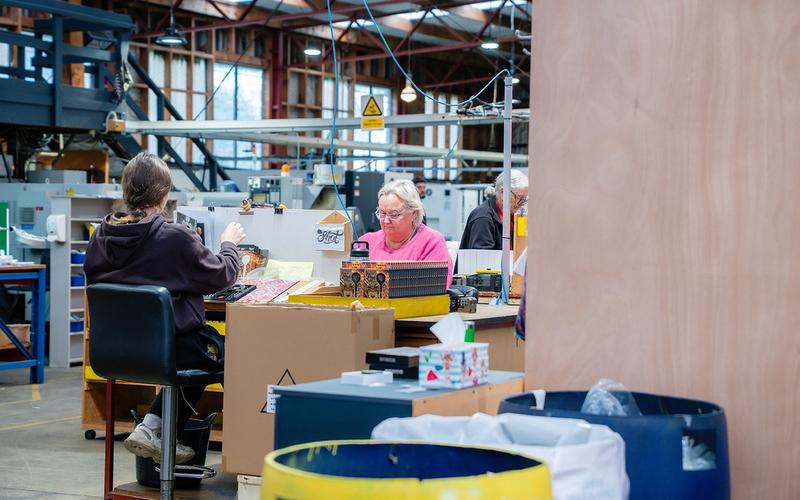
Once automation was introduced to remove ergonomic strain — something operators themselves had flagged — those same operators began asking for robots to solve additional tasks.
From fear to ownership.
That’s transformation.
Growing pains — and growing up
Like many successful SMEs, Argus ManuTech’s biggest challenge right now isn’t survival.
It’s growth.
“Our biggest challenge right now is ‘growing pains,’” Nathan acknowledges.
As production visibility improves through IIoT and connected systems, the pressure shifts to engineering bandwidth and design-for-manufacture support.
When you’re smaller, everyone does everything — and that Kiwi flexibility works.
But at scale, structure becomes essential.
Argus ManuTech is addressing this collectively across the Argus Group, building systems and processes that can handle expansion without losing responsiveness.
That balance — agility plus structure — is what keeps complex builds on track.
Built on cross-functional strength
Argus ManuTech’s progress hasn’t come from one hero leader or one technology.
It comes from cross-functional teams.
“Our progress has been driven by cross-functional teams — people from the shop floor, engineering, leadership, and support functions working together on problems that affect time, cost, safety, and quality,” Nathan explains.
Digital lean training, delivered in partnership with Learning Wave and LMAC, has embedded continuous improvement thinking across roles.
Operators are upskilled to improve automated cells. Engineers learn to design connected systems. Operations teams use live data to make decisions.
This isn’t automation replacing people.
It’s automation raising capability.
Sustainability with structure
As a family-owned business, Argus ManuTech takes a long-term view.
Over the past year, engineers have redesigned their OEM multi-trip IBC foil heater to improve sustainability and commercial viability.
Working alongside sustainability partners, the company:
● completed ESG materiality benchmarking with Kindred Collective
● built capability through sustainability training with The Idea Consultants
● appointed a sustainability lead
● secured board oversight for a three-year sustainability strategy
One design change — replacing an adhesive and moving to a recyclable release liner — diverted 18 tonnes of waste from landfill in six months
It’s a reminder that incremental design decisions can carry real environmental impact.
World-class recognition
The impact of Argus ManuTech’s digital transformation has been recognised externally.
General Manager Nathan Hay received the Excellence in Manufacturing Leadership award at the inaugural Minister for Manufacturing Awards, and was named a 2025 AACSB Influential Leader — reflecting global recognition of business impact.
But inside the factory, the benchmark is simpler:
Can we build it reliably? Can we scale it? Can we support it long-term?
Looking ahead
In the next three to five years, Argus ManuTech’s ambition is clear:
A globally competitive centre of excellence in high-complexity manufacturing — scaling mission-critical builds in aerospace, medtech, and clean tech, while staying proudly NZ-made
For those considering a career in manufacturing, their advice is equally clear:
“Manufacturing is a great fit if you like making real things, solving problems, and seeing the impact of your work every day.”
Advanced manufacturing blends hands-on building with automation, analytics, robotics, and digital systems.
It’s not one path.
It’s many.
Make your move. Make your mark.
From Christchurch workshops to global medtech systems, Argus ManuTech shows what happens when digital confidence meets human capability.
Complexity isn’t something to avoid.
It’s something to master.

The Argus Manutech content was proudly supported by ChristchurchNZ. Their support helps bring Future Makers stories to life and enables us to showcase the businesses and innovators shaping what’s next. We’re grateful for their partnership and commitment to empowering future-focused ideas and talent.